An Unassuming Arrival
The automotive landscape of 1983 was a rather varied tapestry. In one corner, the brute force of American muscle cars still held sway; in another, the delicate precision of Italian exotics vied for attention. Amidst this, however, a more considered, a more engineered approach was quietly taking root, spearheaded by manufacturers like Porsche. The 944, breaking cover for the 1983 model year, was a pivotal machine in this narrative. It wasn't born from the roaring six-cylinder symphony of its 911 brethren, nor the flamboyant aggression of its contemporaries. Instead, it offered a distinctly different flavour of Porsche, one rooted in a transaxle layout that promised balanced dynamics and a more accessible entry into the Stuttgart marque's exclusive club.
Looking back, the 944 represented a bold departure for Porsche. To many purists, the rear-engined 911 was the immutable truth of sports car design. Yet, the engineers in Zuffenhausen recognised the need for a more contemporary, front-engined contender that could capture a broader audience without compromising the brand's inherent performance credentials. The 944 was the answer. It borrowed heavily from the experimental 924 – no bad thing, given the 924's surprisingly sophisticated underpinnings – but elevated it with a larger, more potent engine and a chassis that truly began to sing.
The Transaxle Equation: A Masterclass in Weight Distribution
The heart of the 944's enduring appeal, particularly from an engineering perspective, lies in its transaxle layout. This isn't merely a mechanical curiosity; it's the very foundation upon which its driving dynamics were built. By placing the gearbox at the rear, adjacent to the differential, Porsche achieved a near-perfect 50/50 weight distribution. In an era where many front-engined cars struggled with inherent understeer due to the concentration of mass over the driven wheels, the 944 offered a rare elegance of handling. This balance was crucial; it allowed for a more neutral turn-in, progressive breakaway characteristics, and a general sense of agility that belied its relatively substantial stature.
The engine itself, a 2.5-litre inline-four, was a departure from Porsche's traditional flat-six. Yet, it was a formidable unit, developing a healthy 143bhp in its initial guise. Its overhead camshafts and relatively compact dimensions helped keep the front end light, further contributing to the balanced feel. This engine, often lauded for its torque and linearity, was a testament to Porsche's ability to extract maximum performance from a simpler configuration. The 944 was a clear demonstration that the transaxle principle, when executed with typical Porsche rigour, could deliver an experience every bit as engaging as the more conventional front-engine, rear-drive layout.
The transaxle laid bare Porsche's commitment to driving purity. It wasn't just about numbers; it was about the feel, the feedback, the way the car communicated its intentions to the driver. The 944 was a car that invited you to explore its limits, knowing that its balance would provide ample warning.
A Form Follows Function Aesthetic
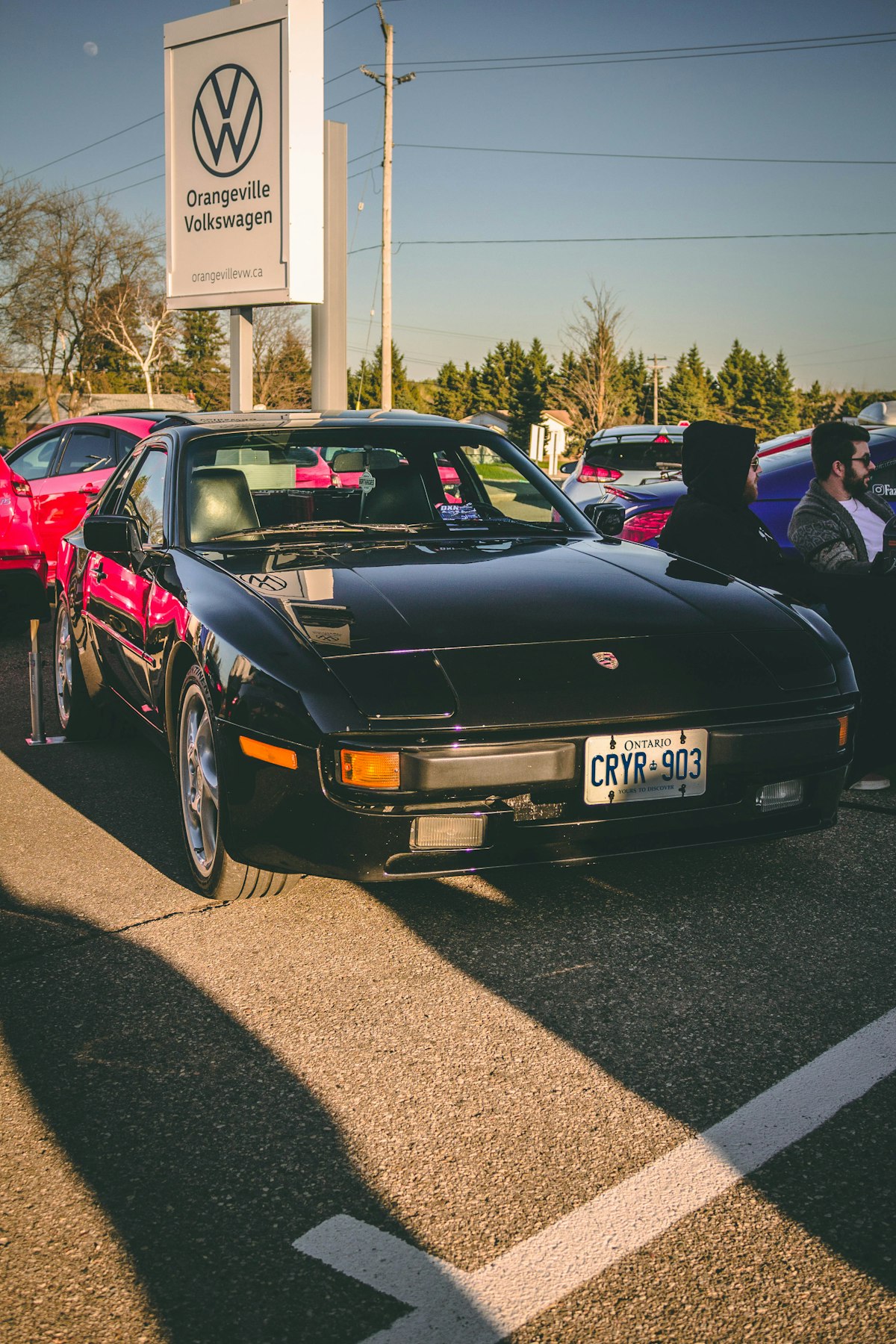
Visually, the 1983 944 presented a more muscular and purposeful stance than its 924 predecessor. The flared wheel arches, a motif that would become a signature of subsequent 944 variants, hint at the wider track and more potent mechanicals beneath. The styling, while undeniably of its time, possesses a timeless quality that stems from its inherent proportionality. The long bonnet, the steeply raked windscreen, and the clean, unadorned lines speak of an era where aerodynamic efficiency was being integrated into design with a keen, almost architectural sensibility.
Step inside, and the cabin reinforces this feeling of functional elegance. The dashboard, while perhaps not as minimalist as a classic 911, is driver-focused. Instrumentation is clear and comprehensive, displaying vital information without unnecessary distraction. The seats, often upholstered in a durable cloth or optional leather, are supportive, designed to hold the occupants firmly during spirited driving. Despite its sporting pretensions, the 944 offered a degree of practicality, with a usable rear seat and a decent boot – a common thread in Porsche's transaxle lineage, blending everyday usability with outright performance.
The Driving Experience: A Symphony of Mechanical Precision
To drive a 1983 944 is to understand the payoff of its engineering. The surge of torque from the inline-four is immediate and linear, pulling the car forward with an insistent, mechanical urgency. The steering, typically unassisted in early models or featuring a relatively light system in later iterations, offers a direct connection to the front wheels, relaying road texture and imparting confidence. There's a clarity to the feedback that is often missing in modern machinery, a tangible conversation between driver and machine.
But it is in the corners where the transaxle truly shines. Turn in, and the initial phase is sharp and eager. As you apply power, the rear-biased weight distribution prevents the nose from washing out, allowing you to maintain a tight line. When the limits are approached, the breakaway is typically progressive and controllable, a testament to the inherent balance Porsche's engineers meticulously crafted. The gearbox, while perhaps not the slickest by today's standards, engages with a satisfying mechanical clunk, the clutch requiring a firm but deliberate action. It’s a car that demands driver involvement, and in return, it delivers an experience that is both rewarding and deeply engaging.
An Enduring Legacy
The 1983 Porsche 944 may not have the immediate name recognition of the 911, nor the exotic allure of some of its contemporaries. Yet, its significance in the Porsche story cannot be overstated. It represented a pragmatic, forward-thinking approach to sports car design, proving that innovation in layout and engine configuration could foster a thrilling driving experience. For the enthusiast who values engineering prowess, balanced dynamics, and the tactile connection to the road, the early 944 remains a compelling proposition, a testament to a time when pure mechanical aptitude was the ultimate performance enhancer.