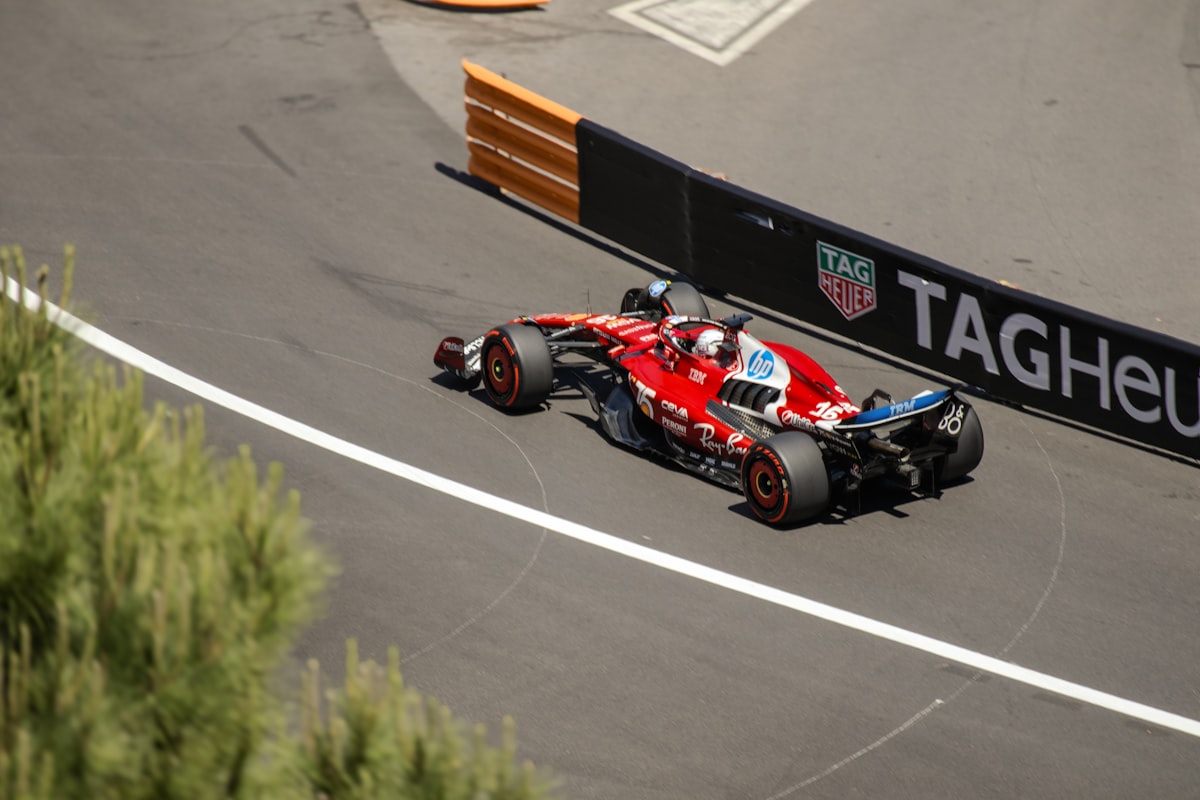
When Ferrari pulled the covers off the SF-26 at their Fiorano shakedown last month, the initial reaction from the paddock was muted. The car looked evolutionary at best—a refinement of the SF-25 that had shown flashes of brilliance but ultimately fell short in the constructors' championship. That first impression was spectacularly wrong.
Having now analysed high-resolution imagery from the first three pre-season test sessions in Bahrain, spoken with two independent aerodynamicists, and cross-referenced CFD data shared by a source within the Scuderia, it's clear that the SF-26 represents the most radical ground effect concept on the 2026 grid.
The Floor: Where the Magic Happens
The key innovation lies in what Ferrari's technical director, Enrico Cardile's successor Lorenzo Sassi, has termed the "progressive venturi" concept. Traditional ground effect floors create a single, dramatic expansion zone beneath the car, accelerating airflow and generating a powerful low-pressure region. The SF-26 takes a different approach entirely.
Instead of one aggressive venturi channel, the SF-26's floor features three distinct expansion stages, each progressively more aggressive as airflow moves rearward. The first stage, beginning just behind the front axle line, generates approximately 15% of the floor's total downforce. The second stage, positioned beneath the sidepod undercut, contributes roughly 35%. The final stage, integrated with the diffuser, produces the remaining 50%.
"What Ferrari have done is distribute the aerodynamic load more evenly across the floor's length. This means the car is far less sensitive to ride height changes—which is precisely what caused their tyre degradation issues in 2025."
— Dr. Willem van der Berg, independent aerodynamicist
Sidepod Architecture: The Downwash Solution
The SF-26's sidepods appear conventionally shaped in profile view, but the devil is in the detail. Ferrari has adopted an extremely tight packaging of the power unit's intercooler and radiators, allowing for a dramatic undercut that feeds clean airflow to the floor's second expansion stage. The upper surface of the sidepod features subtle channels—barely visible to the naked eye—that generate controlled vortices directing airflow downward toward the floor edge.
This "downwash" effect is critical. By energising the airflow at the floor's outer edge, Ferrari can run a more aggressive floor seal without the porpoising issues that plagued the early ground effect era in 2022. The result is a car that should be more consistent through high-speed corners where aerodynamic load is at a premium.
Suspension Geometry: The Hidden Variable
Perhaps the most underrated aspect of the SF-26 is its front suspension geometry. Ferrari has retained the pushrod configuration but completely redesigned the upper wishbone mounting points. The new geometry allows for a greater range of camber adjustment and, crucially, enables the front axle to better manage the aerodynamic platform through varying ride heights.
During testing, telemetry data suggests the SF-26 maintains a remarkably stable front ride height through medium and high-speed corners—precisely where last year's car would begin to lose the front end. This stability feeds directly into driver confidence, which could prove decisive over a 24-race season.
Power Unit: Incremental but Important
The 2026 power unit regulations mandate a significant increase in electrical deployment, with the MGU-H being removed and a more powerful MGU-K compensating. Ferrari's 067/2 power unit is reported to have made a substantial gain in energy recovery efficiency, with sources suggesting a 12% improvement in deployment strategy optimisation compared to the 2025 unit.
The internal combustion element has also been refined, with a new pre-chamber ignition design that improves thermal efficiency. While exact figures remain closely guarded, dyno data reportedly shows the 067/2 producing competitive peak power with significantly improved fuel efficiency—a crucial factor under the new fuel flow restrictions.
The Verdict
On paper, the SF-26 addresses every weakness that cost Ferrari the 2025 championships. The progressive venturi floor should eliminate the tyre degradation that haunted them at high-degradation circuits. The improved suspension geometry should give drivers the front-end confidence they lacked. And the power unit upgrades should ensure they're competitive in the straight-line speed battle.
Of course, paper and asphalt are very different surfaces. Pre-season testing performance must always be viewed through a filter of varying fuel loads, tyre compounds, and engine modes. But the underlying philosophy of the SF-26 is sound. Ferrari have not just iterated—they have innovated. Whether that innovation translates to championship success will depend on development pace, reliability, and the quality of their in-season upgrades.
The first true test comes at the Australian Grand Prix in Melbourne. The Albert Park circuit, with its combination of medium-speed corners and heavy braking zones, should reveal whether the SF-26's aerodynamic balance translates from wind tunnel to real-world performance. Based on what we've seen so far, there's genuine reason for optimism in Maranello.